Skip to main content
Transaction Journal
Detailed Module Guide: Transaction Journal
Module Location
General Ledger > Transaction Journal
Module Objective
The Transaction Journal module is a very powerful reporting and drill-down center. Its purpose is to display all transaction details from every module in the ERP system in a single, integrated view. This module is not used for inputting new data but rather for viewing, analyzing, and exporting transaction data for auditing, reconciliation, or in-depth analysis.
1. Main View (Transaction Report Center)
The main page of this module is an interactive report equipped with various filtering tools to help you find specific data.
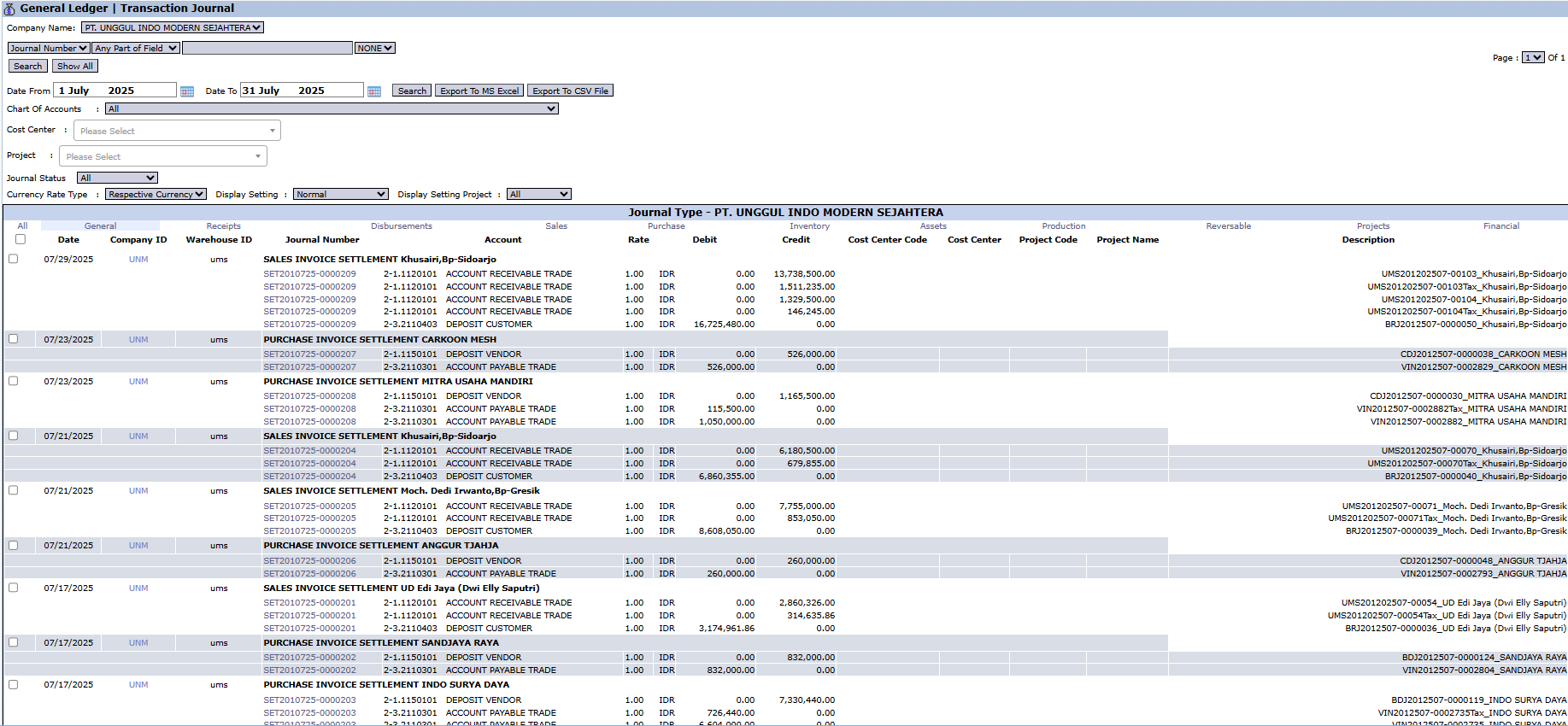
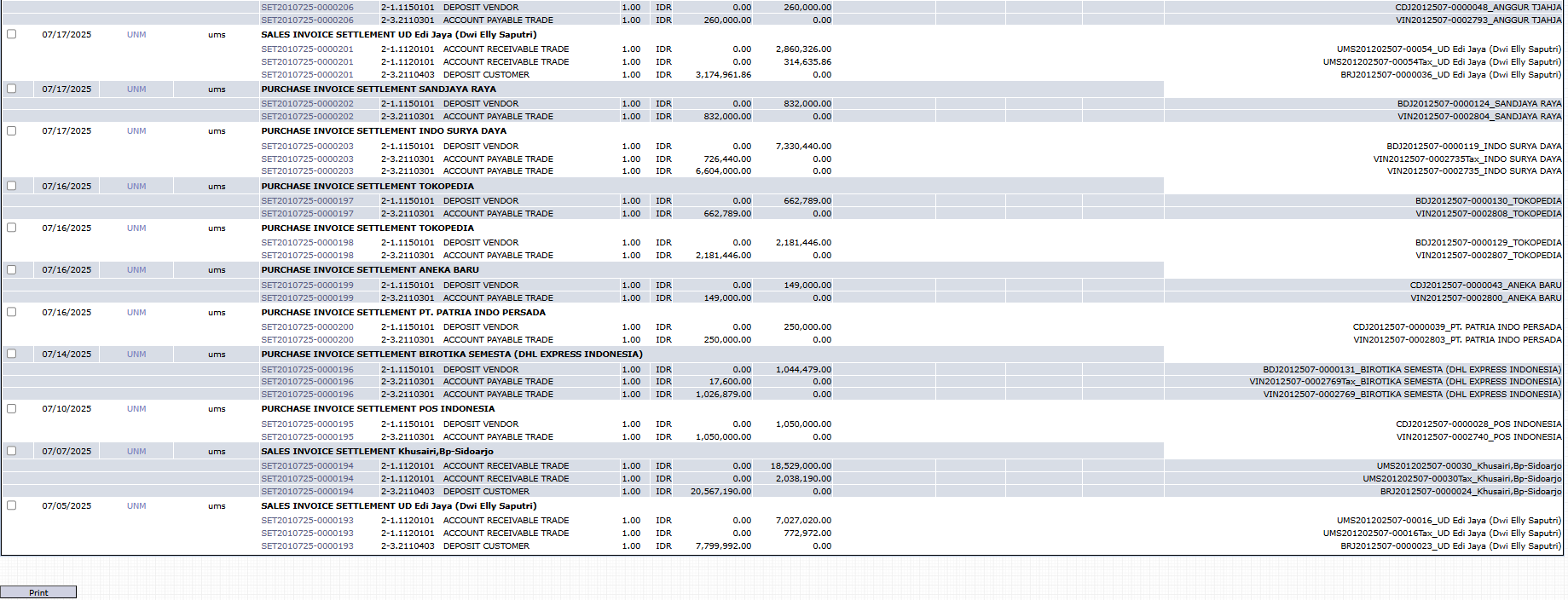
View Explanation
This page is designed to provide full visibility into all of the company's financial activities.
-
Advanced Filters: The top section of the page provides various filters to sift through very large amounts of data.
-
Transaction Table: The main section displays a detailed list of every journal line (debit and credit) that matches the filter criteria. For example, you can see journals from "SALES INVOICE SETTLEMENT" and "PURCHASE INVOICE SETTLEMENT" on one screen.
Advanced Filter Functions
-
Date: Specify a Start Date and End Date range to limit the transaction period.
-
Chart of Accounts: Filter transactions that only affect specific accounts.
-
Cost Center & Project: Filter transactions that are only allocated to specific departments or projects.
-
Journal Status: Choose to display journals with a specific status (e.g., already approved).
Table Column Explanation
-
Journal Number: The unique code for each transaction.
-
Account: Displays the code and name of the affected account on each journal line.
-
Debit / Credit: Displays the monetary value of the transaction.
-
Source Columns (Sales, Purchase, etc.): These columns likely serve as markers indicating which module the transaction originated from.
Main Button Functions
-
Search / Show all: To apply filters or display all data again.
-
Export to MS Excel / Export To CSV File: The most important feature in this module, allowing you to download the displayed data for further processing outside the system.
2. Usage Example (Case Study)
Case: The Finance Manager wants to analyze all business travel expenses for the entire company during the third quarter of 2025.
Steps:
-
Open the Transaction Journal module.
-
Set the Start Date to July 1, 2025, and the End Date to September 30, 2025. 
-
In the Chart of Accounts filter, search for and select the "Business Travel Expense" account.

-
Click the Search button. The system will display all journal entries related to business travel expenses in that period. 
-
Click the Export to MS Excel button to download the data and create custom reports or charts. 
Tips & Important Notes
-
This module is read-only. You cannot create, modify, or delete transactions from this page.
-
Take advantage of the Export to MS Excel feature for more in-depth data analysis, such as creating Pivot Tables, summarizing by department, or creating trend graphs.
-
Because this module pulls data from the entire system, always use filters (especially the date filter) to speed up the search process and prevent excessive load on the system.
-
This module is essential for the Accounting, Finance, and Internal Audit teams for transaction tracing, account reconciliation, and auditing processes.