BC 2.6.1
Customs Documents Module Guide
Module Location:
CEISA > Customs Documents > BC 2.6.1
Purpose
The BC 2.6.1 form is used for the temporary release of imported goods and/or goods originating from elsewhere within the customs territory from a Bonded Warehouse (TPB) to Another Location Within the Customs Territory (TLDDP). This document is used when goods are temporarily released from the TPB and may subsequently be re-entered into the TPB via the BC 2.6.2 form.
How to Open
- Log in to the CEISA app.
- Select the Customs Documents menu.
- Click the BC 2.6.1 submenu.
- The system displays the Document List page.
Page Display
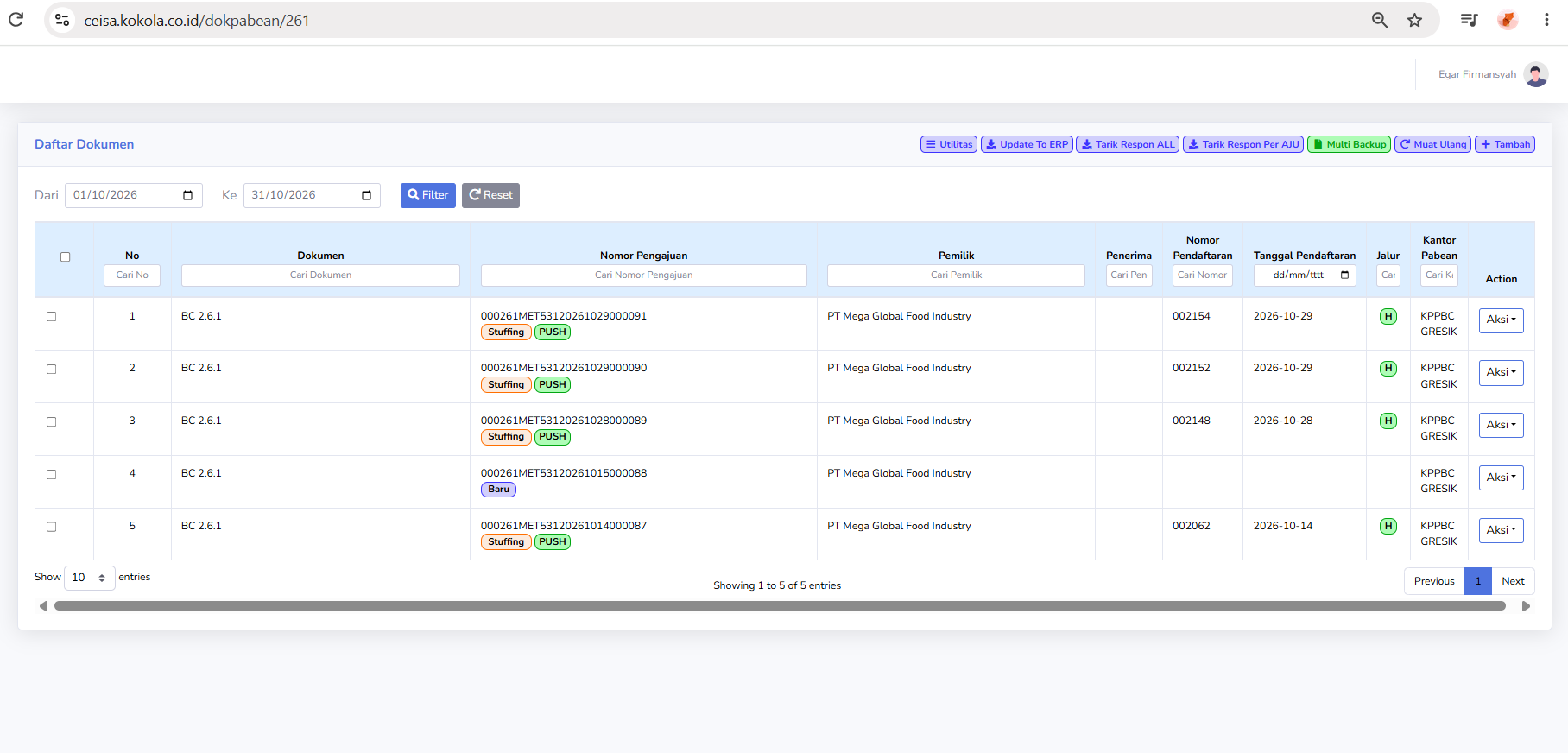
The main page displays a list of BC 2.6.1 documents created within a specific time period. At the top, there are date filters, utility buttons, a synchronization button, a response retrieval button, and a button to add a new document.
Each row in the table displays key document information, such as document type, submission number, owner, recipient, registration number, registration date, route, customs office, and an “Actions” button.
Column Descriptions
The columns available on the document list page include:
- Checkbox: Used to select specific documents if the system supports bulk selection.
- No.: Displays the sequential number of the data in the table.
- Document: Displays the document type, namely BC 2.6.1.
- Submission Number: Displays the identification number of the document submission.
- Owner: Displays the name of the company or party owning the goods.
- Recipient: Displays the party receiving the goods.
- Registration Number: Displays the document’s registration number from the customs system.
- Registration Date: Displays the document’s registration date.
- Channel: Displays the service or inspection channel for the document.
- Customs Office: Displays the Customs and Excise office handling the document.
- Action: Displays a button to initiate further actions on the document.
The table header also includes individual search columns, allowing users to search for data by document, application number, owner, recipient, registration number, or customs office.
Button Descriptions on the List Page.
- Filter: Displays documents based on the selected period.
- Reset: Resets the filter to its default settings.
- Utilities: Opens additional features available in the module.
- Update to ERP: Used to update or synchronize document data with the ERP system.
- Retrieve ALL Responses: Retrieves or updates customs responses for all relevant documents.
- Retrieve Response by AJU: Retrieves responses based on a specific application number.
- Multi Backup: Backs up multiple documents at once.
- Reload: Refreshes the document list view.
- Add: Creates a new BC 2.6.1 document.
- Actions: Opens options for further actions on the document.
Status and Workflow Explanations
In the Application Number column, the system may display process status labels, such as:
- New: Indicates that the document is still in the initial stage or has just been created.
- Stuffing: Indicates that the document is in a specific process stage according to the application workflow.
- PUSH: Indicates that data is being sent or synchronized within the application.
In the “Path” column, the system displays service path indicators, for example:
- H: Generally indicates the Green Path.
- Other paths may appear depending on the customs system’s response.
Note: Status names such as New, Stuffing, and PUSH are labels that appear in the CEISA Kokola application. Their detailed operational meanings must be aligned with business processes and official system responses.
Table Navigation Explanation
At the bottom of the table, you’ll find the following features:
- Show entries: Sets the number of data rows displayed.
- Previous: Go to the previous page.
- Next: Go to the next page.
- Showing x to y of z entries: Displays the number of data entries currently shown.
- Horizontal scrollbar: Used to scroll the table if not all columns are visible on the screen.
Document Edit Page
When a user opens a document using the Action button, the system displays the BC 2.6.1 document details or edit page. At the top of the edit page are the following buttons:
- Back: Return to the previous page.
- Print: Print the document.
- Validate: Checks the completeness and accuracy of the document data.
- Show History: Displays the process history or document history.
The edit page contains several tabs, namely:
- Header
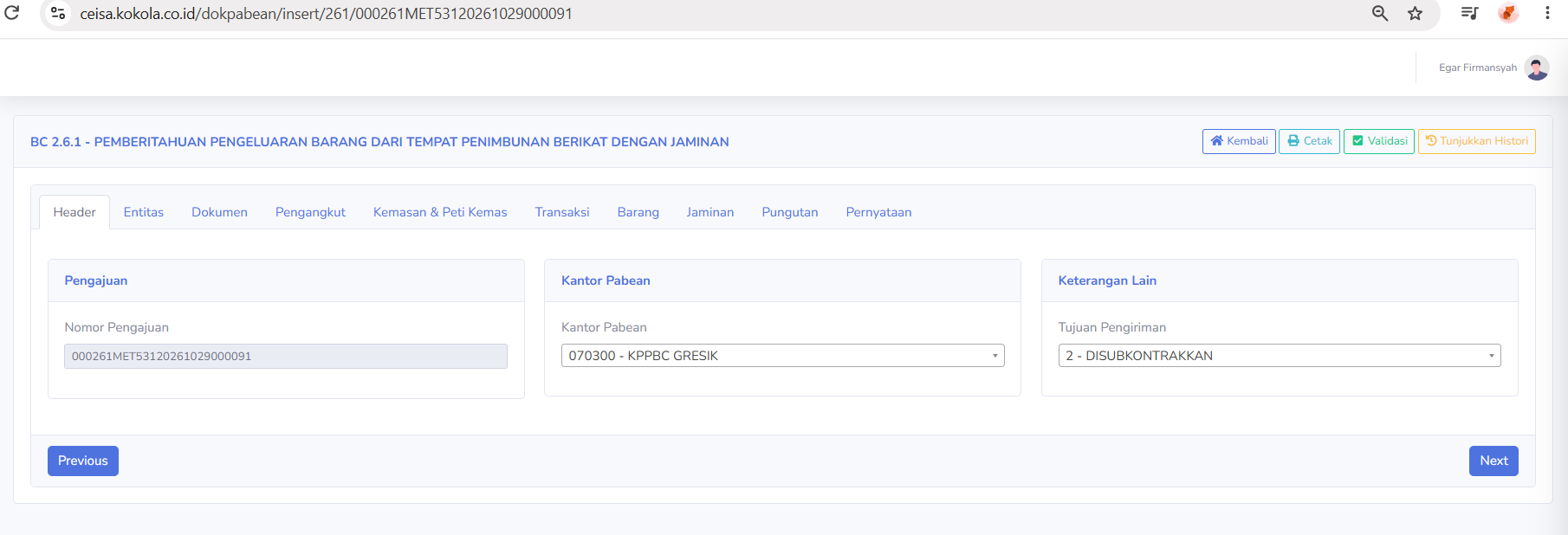
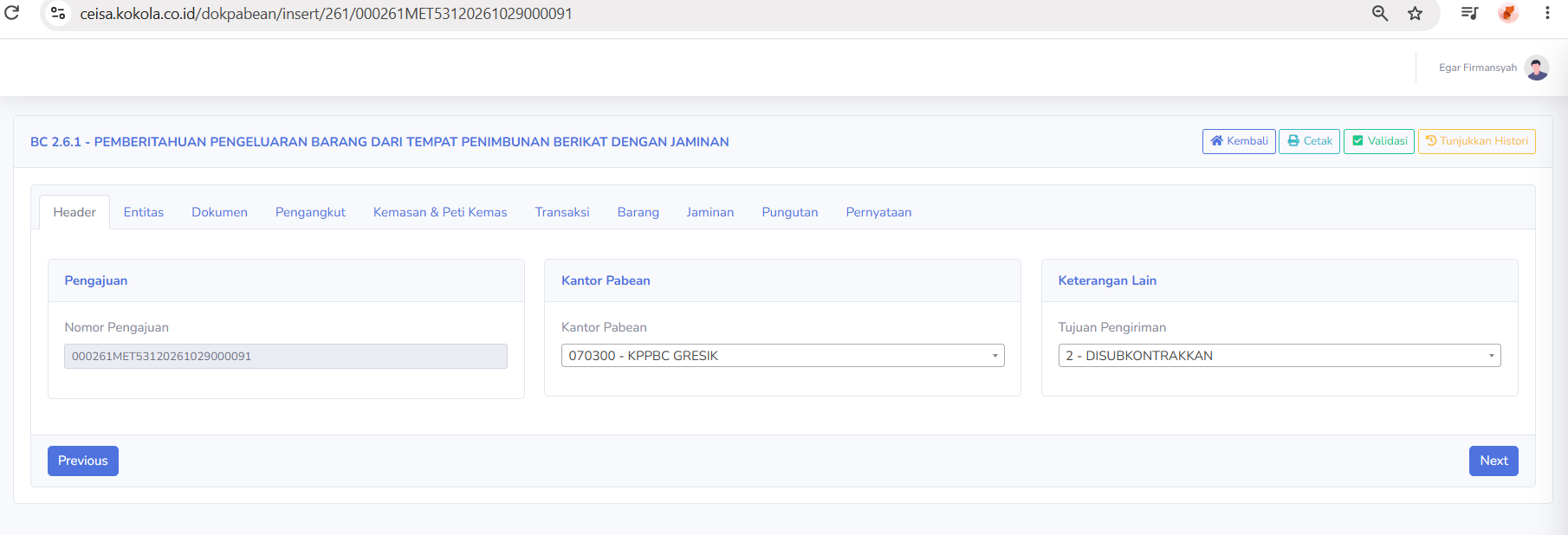
The Header tab is used to display general data regarding BC 2.6.1 document submissions.
The available sections include:
-
Submission
Submission Number: Displays the document submission identification number.
Customs Office
Customs Office: Displays the Customs and Excise office where the document was registered.
-
Additional Information
Shipment Purpose: Displays the purpose of the temporary release of goods, such as subcontracting or other purposes as required by the transaction.
This tab serves as a basic summary of the document, which will be continued on the next tab.
-
- Entity
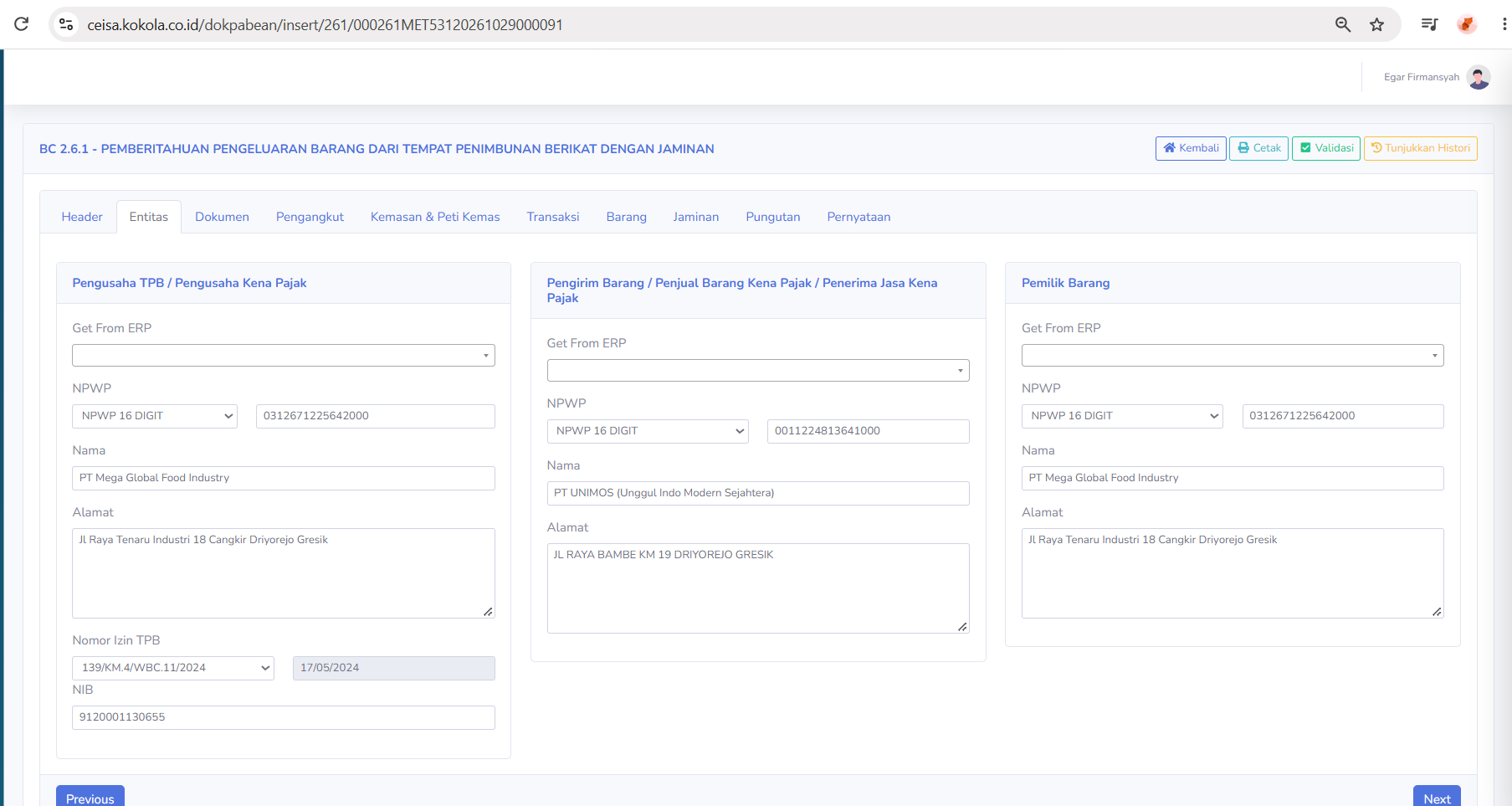
Tab Entitas digunakan untuk mengisi dan menampilkan data pihak-pihak yang terkait dalam transaksi pengeluaran sementara barang. Terdapat tiga bagian utama:
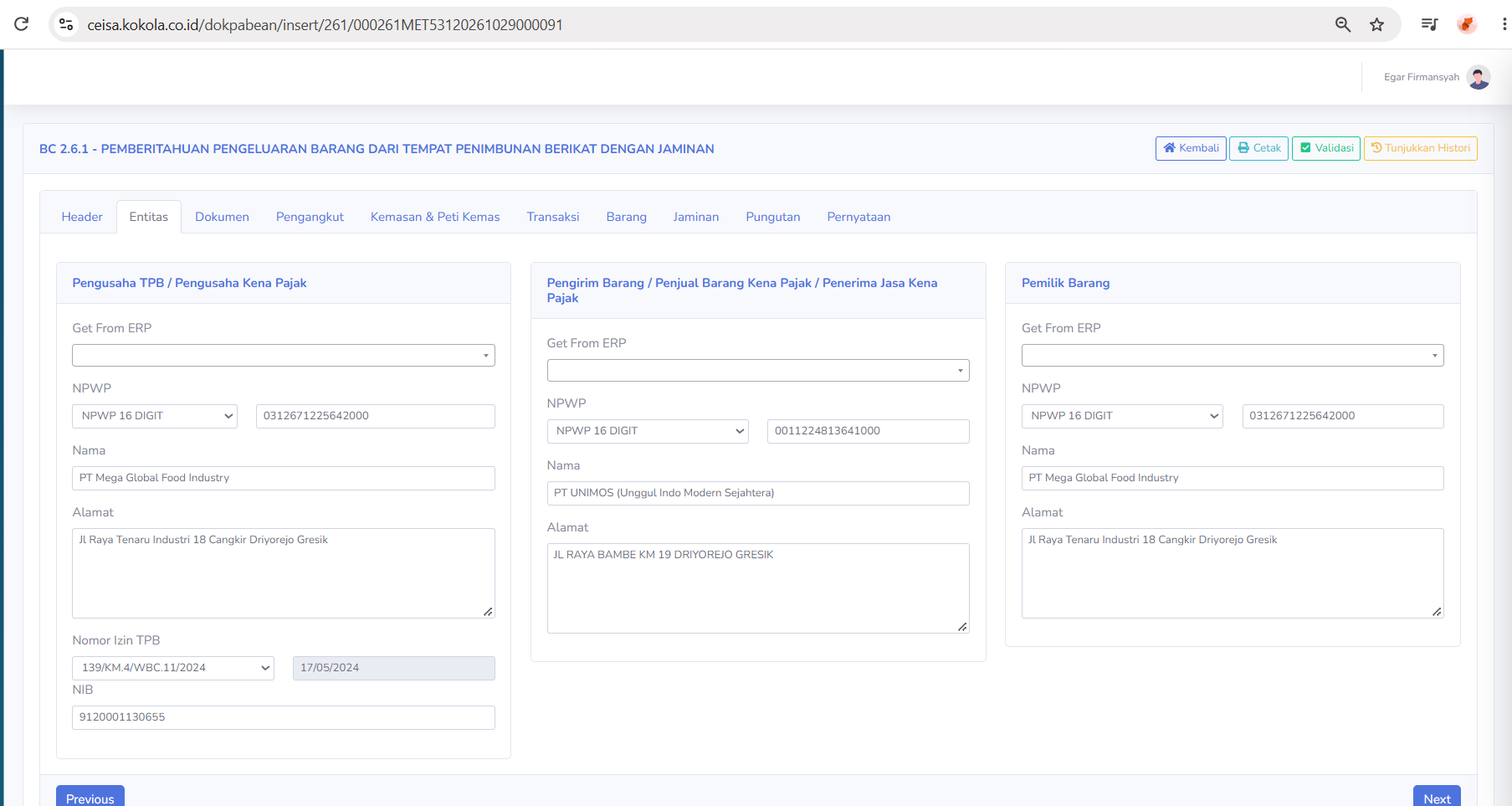
- TPB Business Owner / Taxable Business Owner
Available columns include:
-
Get From ERP
- NPWP
- Name
- Address
- TPB License Number
- Permit Date
- NIB
This section is used to display the identity of the TPB managing company.
-
- Shipper / Seller of Taxable Goods / Recipient of Taxable Services
The available fields include:
- Get From ERP
- Tax ID Number (NPWP)
- Name
- Address
This section is used to enter information about the shipper or the party involved in the shipment of goods.
- Item Owner
Available fields include:- Get From ERP
- Tax ID Number
- Name
- Address
This section is used to record the owner of goods that have been temporarily released.
- Document
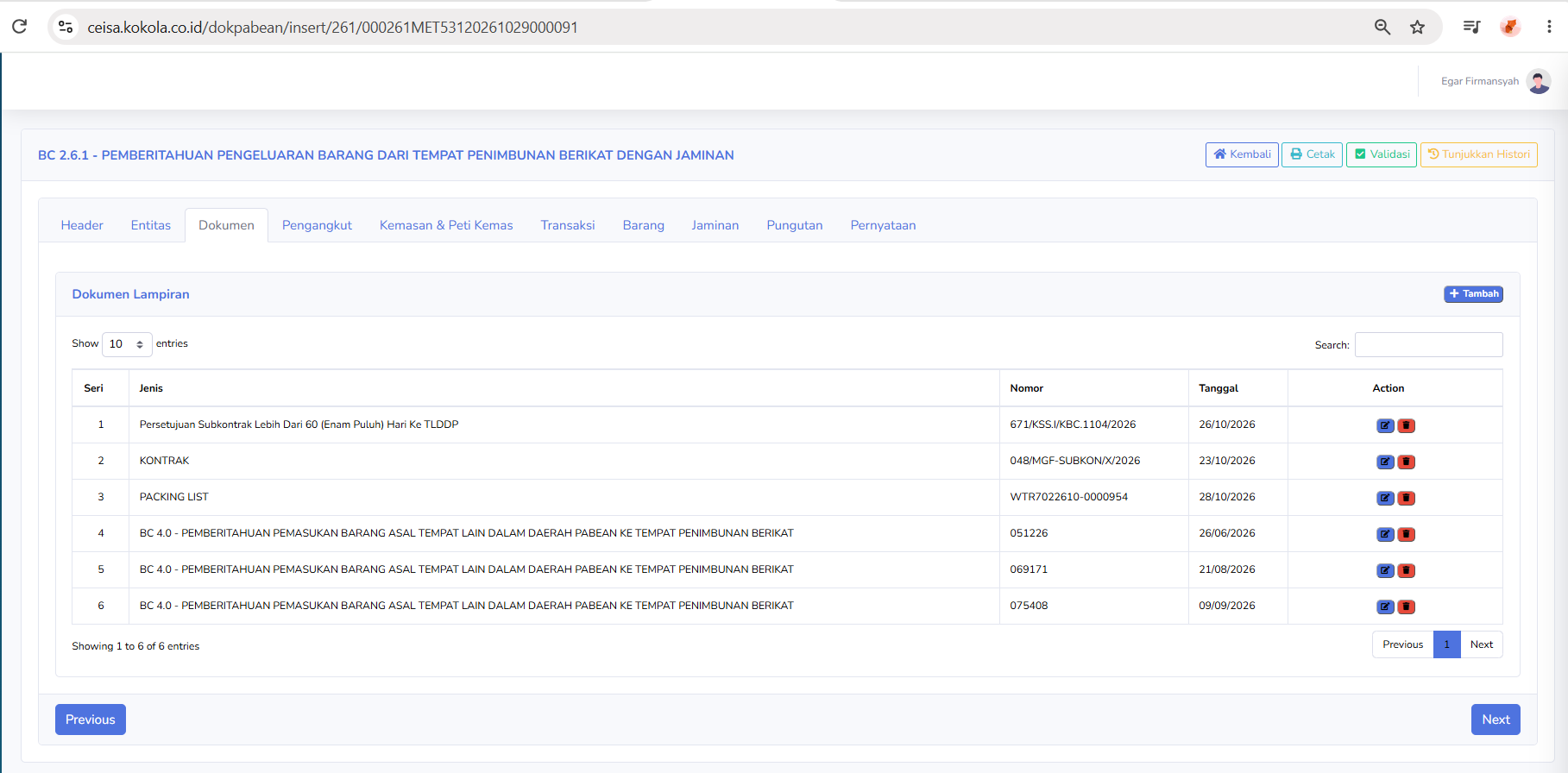
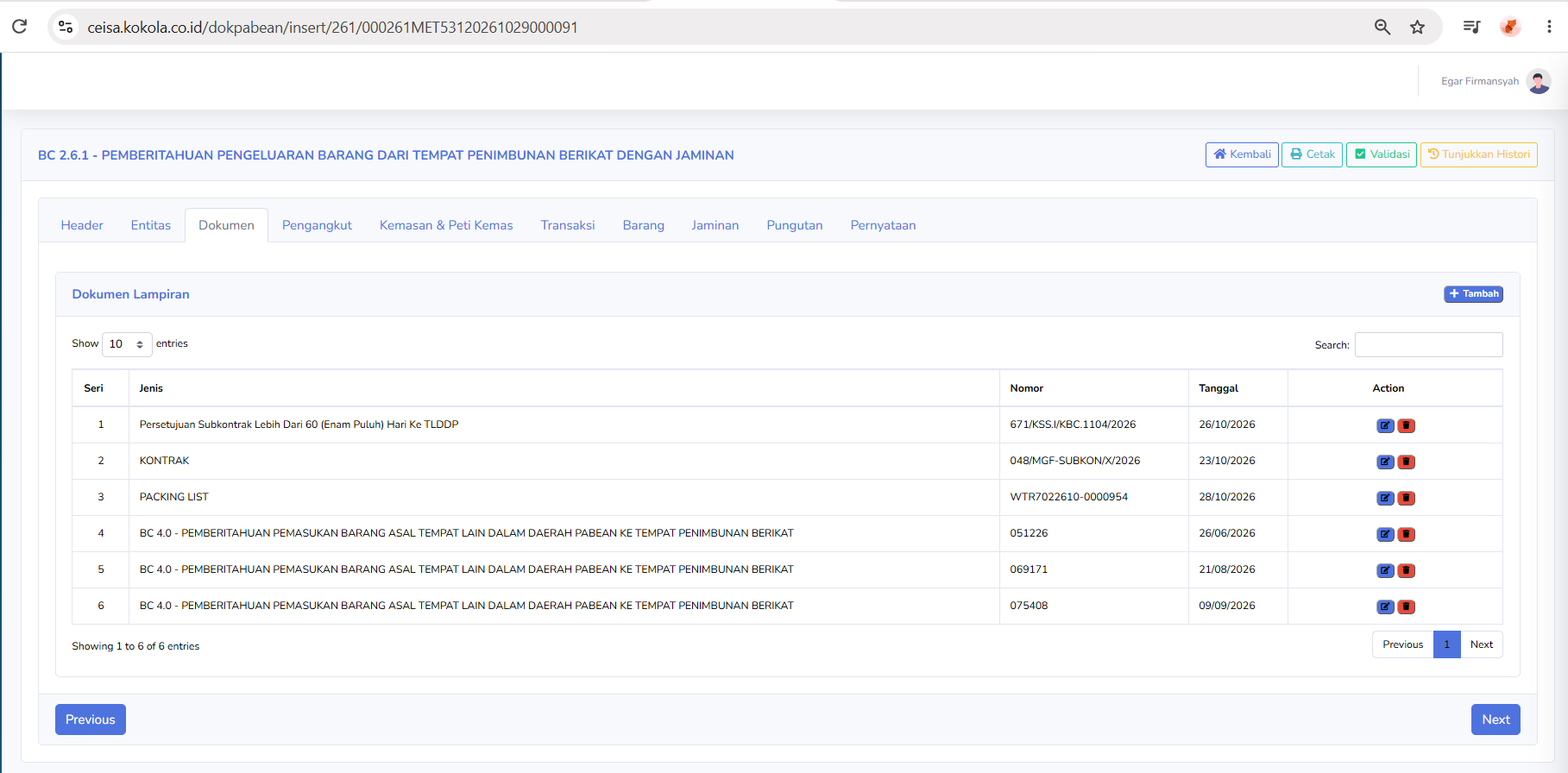
The Documents tab is used to manage attached documents or supplementary customs documents that support the BC 2.6.1 submission.
Available columns include:
- Series
- Type
- Number
- Date
- Action
Examples of documents shown in the screenshot include:
-
Approval of Subcontracts Exceeding 60 (Sixty) Days to TLDDP
- Contract
- Packing List
-
BC 4.0 - Notification of Import of Goods Originating from Another Location Within the Customs Area into a Bonded Warehouse
Available buttons:
- Add : a new attached document
-
Edit Icon: Modifies attachment data.
-
Delete Icon: Deletes attachment data.
- Search : Search for a specific attachment.
- Show entries : Adjust the number of records displayed in the table.
This tab is used to verify that the supporting documents for temporary export are complete.
- Carrier
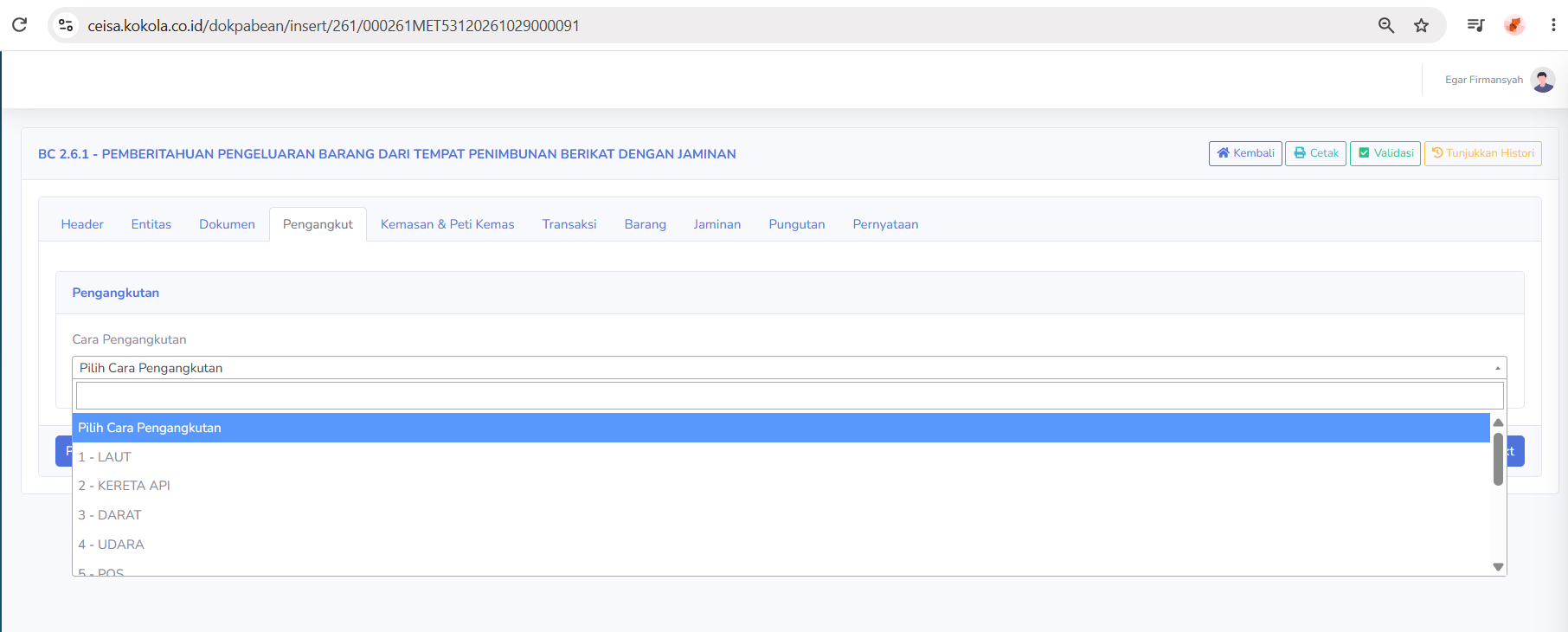
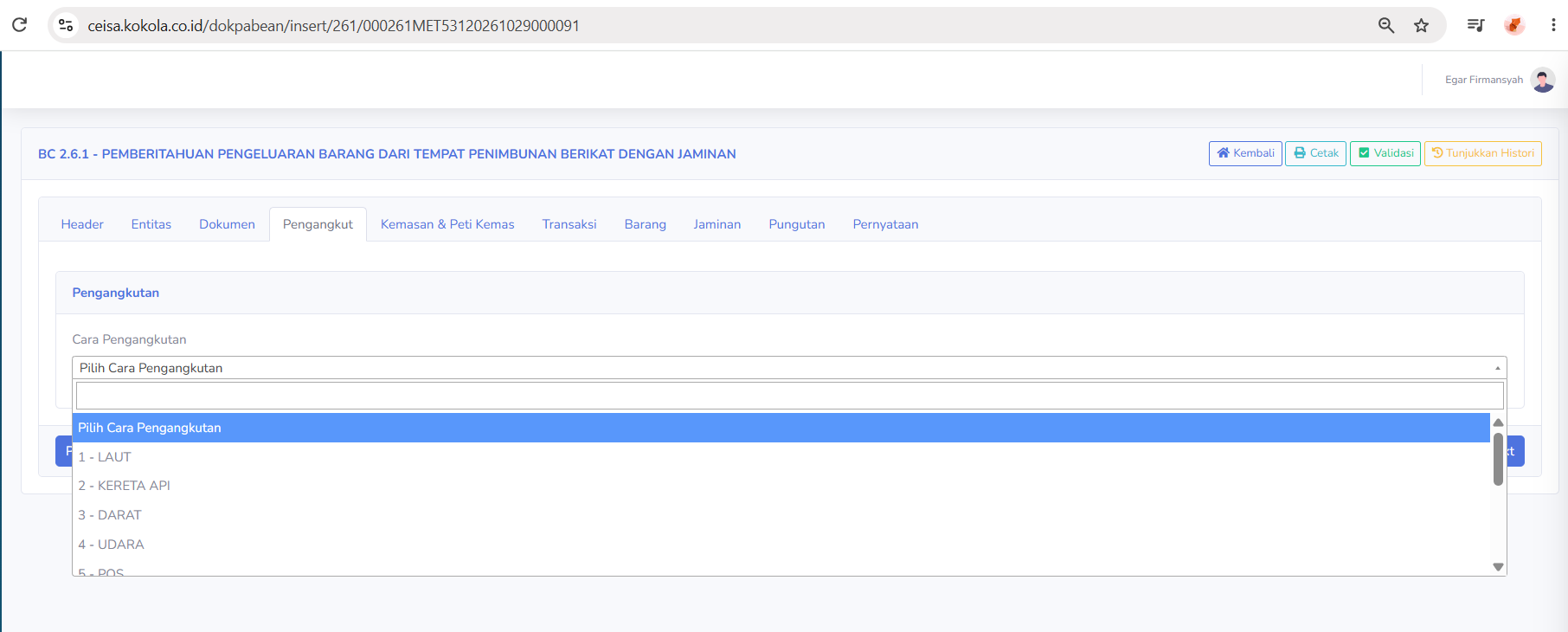
The Shipping tab is used to specify the method of shipping goods.
Available sections include:
Shipping MethodThis dropdown displays several options, such as:
- 1 - SEA
- 2 -RAIL
- 3 - ROAD
- 4 - AIR
- 5 - MAIL
-
and other options as listed in the system.
Users select the shipping method based on the mode of transportation used during the temporary release of goods.
- Packaging & Containers
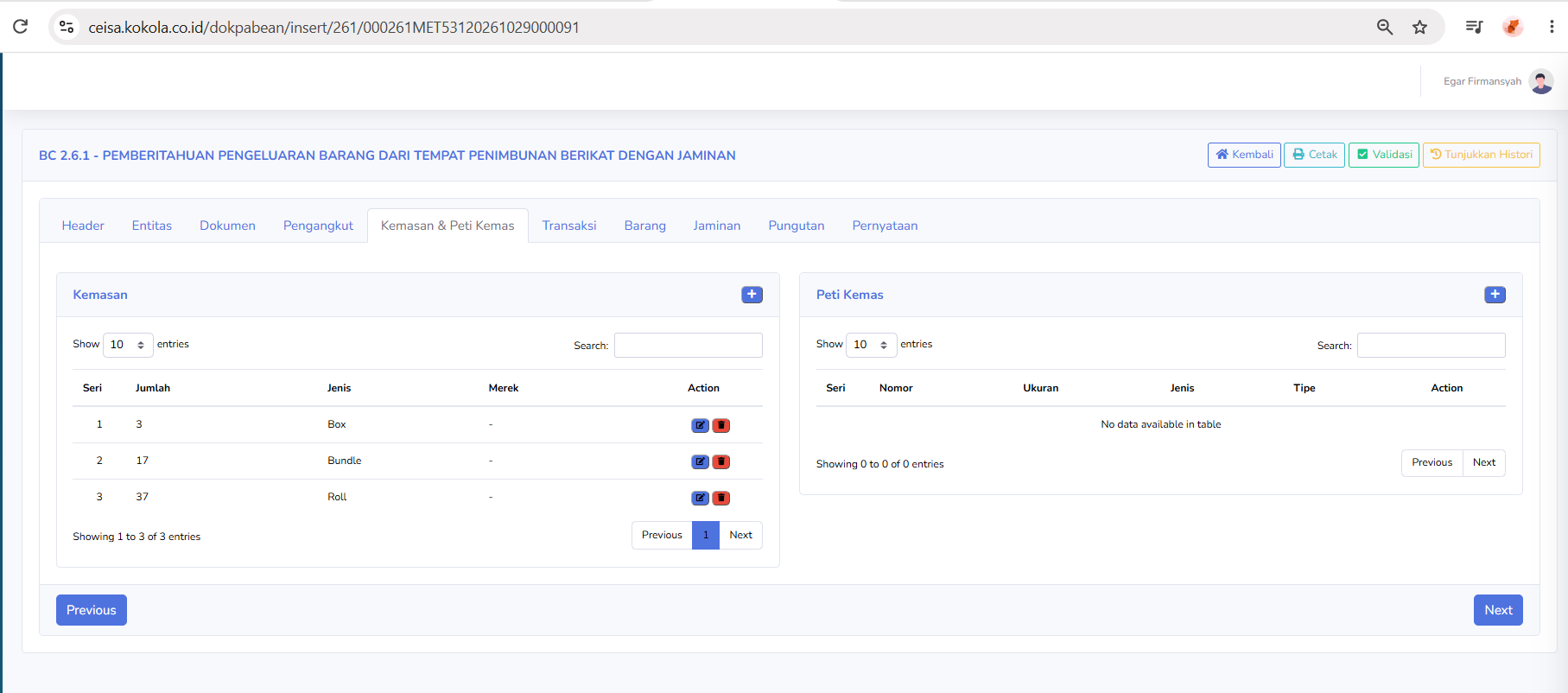
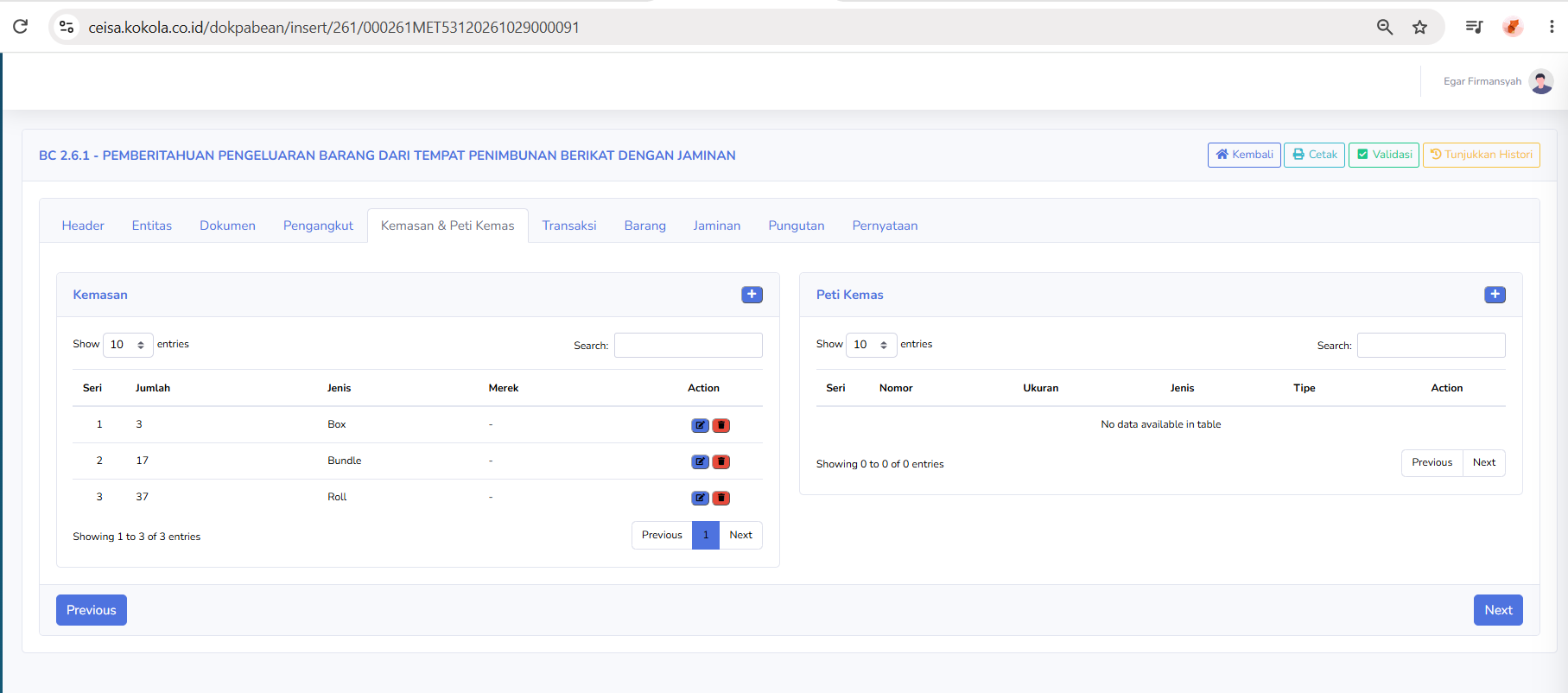
The Packaging & Containers tab is used to record data on product packaging and containers.
There are two main sections:
Packaging
Available columns:
- Series
- Quantity
- Type
- Brand
- Action
The screenshot shows an example of packaging data:
- Box
- Bundle
- Roll
The Add (+) button is used to add new packaging data.
Container
Available columns:
- Series
- Number
- Size
- Type
- Class
- Action
In the screenshot, this section displays the message “No data available in table,” which means no container data has been entered yet.
This tab is used to record the packaging types of items being shipped.
- transaction
- collateral
- levy
- statement